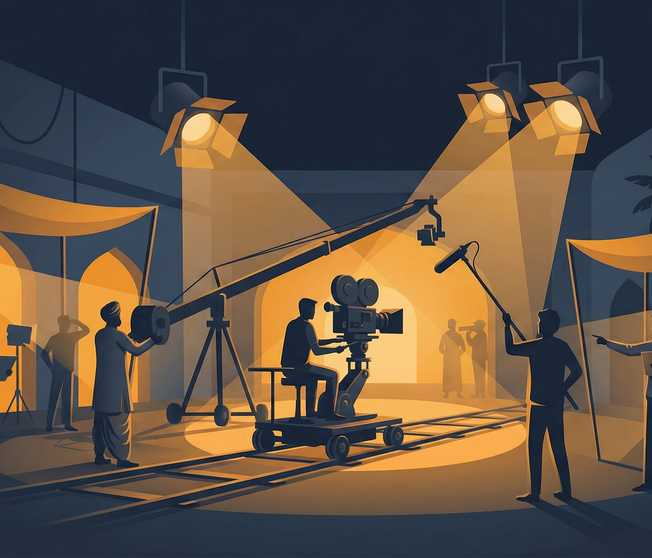
How to Build a Film Industry Network from Absolute Zero — The Outsider's Playbook
-

Lavkush Gupta
-
May 04, 2026
-
8
Why Your Talent Is Table Stakes — And Your Network Is the Game
Here is the honest truth that film schools rarely say out loud: talent is the entry fee, not the winning hand.
The Indian film industry — Bollywood, Tollywood, Kollywood, and every other wood — runs on trust chains. A director trusts a producer who trusts a casting director who trusts an assistant who trusts their batch-mate from their first production. Every job passed along this chain is an act of personal vouching. Nobody wants to risk their reputation on an unknown quantity when they have a trusted quantity one phone call away.
This is not corruption. It is not nepotism in the traditional sense either. It is human psychology at industrial scale. When you are building a film with a 40-crore budget and a 120-day shoot, you do not have time to gamble on someone you have never seen under pressure. You call someone whose work you know, whose character you have observed, whose commitment you have seen tested.
The only way to become that "known quantity" is to get into rooms. And the only way to get into rooms is to build a network — one genuine relationship at a time.
Nepotism vs. Networking — Let's Actually Separate These Two
People conflate these constantly, and it muddies the conversation.
Nepotism is when Karan gives Alia a lead role in a major studio production purely because of family proximity, completely bypassing merit, audition, or experience. That is real. It happens. It is also concentrated at the very top — the Rs. 100-crore productions, the A-list launch vehicles. Most of the industry is not operating there.
Networking is when you spend six months as an unpaid production assistant on an indie short, build a reputation for being reliable and sharp, and then get referred by the director to their next feature. That is not nepotism. That is how every functioning industry on earth works.
The outsider's mistake is seeing both as the same wall. They are not. Nepotism is a wall you cannot climb. Networking is a ladder you build rung by rung. And below the very top tier of the industry, networking is how almost everyone actually gets in.
The Realistic Timeline — Because Honesty Is a Kindness
Before the strategies, you need to hear this: building a functional industry network takes 18 to 36 months minimum. There is no hack. There is no shortcut that does not eventually blow up in your face.
What the timeline looks like, roughly:
- Months 1–6: You are invisible. You are learning where people gather, attending events, introducing yourself, making your first five to ten genuine connections. Most conversations go nowhere immediately. That is normal.
- Months 6–18: You start to recognise faces. People start to recognise yours. You get your first small referrals — maybe a day's work, maybe a background role, maybe a PA spot. Your credibility is a sapling.
- Months 18–36: Your network starts to compound. The people you helped in month eight are now two rungs up. The director whose set you worked on has moved to a streaming project. You get a call. Things start to accelerate.
Anyone promising you industry connections in 30 days is selling you something — and probably something expensive and useless.
Where to Actually Go: The City-Specific Networking Map
Mumbai — The Main Stage
Mumbai is where the density is highest. Here is where outsiders should concentrate their physical presence.
Prithvi Theatre, Juhu is not just a venue. On any given evening, the café outside Prithvi is a semi-organised gathering of working actors, directors, playwrights, casting assistants, and newcomers. The theatre runs a calendar of workshops, readings, and festivals. Prithvi's programming — especially the Prithvi Theatre Festival every November — draws names who are accessible in ways they are not anywhere else. Show up. Volunteer. Stay after the show and have a coffee.
Versova's café culture around Yari Road and Four Bungalows is where the film industry actually lives. Many of the casting studios, production offices, and talent agencies in Mumbai are concentrated in Andheri West. The cafés in this micro-ecosystem — especially on weekday mornings — are genuinely full of industry professionals on working breaks. You will not close a deal in a café. But you will meet someone, exchange a number, and lay a foundation.
Andheri workshops — specifically the acting institutes and filmmaking workshops that cluster around the Andheri East and West areas — are where structured networking happens for newcomers. Barry John Acting Studio, Kishore Namit Kapoor's KJKM, Roshan Taneja School of Acting — these are not just training grounds. They are network incubators. Your classmates are your first network.
Film Division of India, Peddar Road hosts screenings, discussions, and archival events that attract documentary filmmakers, NFDC-circuit directors, and serious cinephiles. This is the less-glamorous but often more accessible end of the Mumbai film ecosystem.
Hyderabad — The Rising Hub
Hyderabad's Telugu film industry is one of the most commercially powerful in the world right now, and it is far less saturated with outsider competition than Mumbai.
Ramoji Film City is the largest integrated film studio complex in the world and runs regular studio tours and occasional open events. More importantly, the ecosystem of workshops, dubs, and productions operating in and around Ramoji creates consistent foot traffic from working industry professionals. Attend events there. Get familiar with the space.
Film Nagar (the residential and commercial neighbourhood near Jubilee Hills and Banjara Hills) is to Hyderabad what Versova is to Mumbai. The production offices, the casting calls, the informal chai-time conversations — they all happen here. If you are building a Telugu or Telugu-adjacent career, physical presence in Film Nagar matters.
The Hyderabad Film Institute and various Telugu film workshops run by established directors and DPs are also worth tracking. They tend to be smaller than Mumbai's equivalents, which is actually an advantage — the room-to-ratio of attendees to instructors is better.
Chennai — The Kodambakkam Circuit
Chennai's film ecosystem — producing Tamil, Telugu dubs, Malayalam co-productions, and Hindi-Tamil crossovers — is tightly knit and historically guild-driven. Outsiders face the steepest cultural integration challenge here, because language and regional roots matter more in Kodambakkam than in Versova.
The practical entry points are through Tamil film workshops run by working DPs and directors (several operate semi-publicly and advertise on Tamil film social media circles), short film communities (Tamil YouTube film culture is enormous and very active), and Nadigar Sangam events for actors.
The assistant route — which we will cover shortly — is especially powerful in Chennai because personal recommendations carry disproportionate weight in the Tamil industry's tight trust networks.
Film Festivals — How to Attend Strategically, Not Touristly
Attending a film festival as a fan is not the same as attending it as a networker. Here is the difference.
MAMI Mumbai Film Festival (usually October–November) is the highest-density networking event in Indian cinema. The Jio MAMI edition in particular draws international programmers, Netflix and Amazon commissioning editors, studio executives, and indie filmmakers all into the same venues. The trick: attend the Q&A sessions, stay for the after-discussions, and volunteer if you can. Volunteers get access to green rooms and industry spaces that ticket buyers do not.
IFFI Goa (November) is the government's flagship and has a significant industry delegation presence alongside the public programming. The Film Bazaar at IFFI is where co-production deals get made. For newcomers, the Film Bazaar workshops and the Viewing Room (where work-in-progress films screen for buyers) are goldmines of accessible industry conversation.
Dharamshala International Film Festival is smaller, more intimate, and — crucially — that intimacy means the barriers between audience and filmmaker collapse almost entirely. The mountain setting, the short distances between venues, the communal meals — they all create conditions for genuine conversation. If you can only attend one festival in your first year, DIFF is the one that will give you the highest-quality connections per rupee spent.
Jio MAMI Word to Screen Market specifically targets writers and directors pitching IP — if you have a project in development, this is where you want to be.
The non-negotiable festival rule: have something to say before you go. Know the films screening. Watch at least three before the festival so you can talk about them. Industry professionals are not looking to mentor random attendees — they are looking for people who are clearly already in the work.
Social Media as a Genuine Networking Tool
Most people use social media for film networking completely wrong. They follow celebrities and hope to get noticed. That is not networking. That is wishing.
Here is what actually works.
Instagram: The indie film community on Instagram is surprisingly accessible. Short film directors, DPs, production designers — many of them are building their own audiences and genuinely engage with thoughtful comments. Do not just heart posts. Leave specific, informed observations on the craft. "The way you handled the colour grade in the transition at 2:14 — was that a deliberate nod to the opening palette?" That comment tells someone you are watching with real attention. Over 30 such interactions, you become a recognisable name in someone's notifications. That is a foundation.
LinkedIn: The Indian film industry is underusing LinkedIn compared to most sectors, which means the field is wide open. Post consistently about film craft, industry analysis, festival coverage, your own short film work. The professionals who are on LinkedIn tend to be producers, studio executives, casting directors, and post-production supervisors — exactly the people who can open doors. Connect directly with a personalised note that references something specific about their work.
Twitter/X: The Indian film Twitter community — sometimes called FilmTwitter India — is one of the most engaged cinephile communities online. Critics, directors, producers, and serious cinephiles all cohabit this space. Jump into festival threads, reply to craft discussions, share your own analysis. The signal-to-noise is higher here than Instagram for serious film discourse.
The golden rule across all platforms: give before you ask. Comment, share, celebrate other people's work for months before you ever make a request. Transactions from strangers are spam. Transactions from people who have already added value feel different.
The WhatsApp Group Ecosystem — The Hidden Layer
Nobody talks about this publicly, but the Indian film industry runs on WhatsApp groups. There are groups for Bollywood casting calls, Telugu assistant directors, Mumbai indie filmmakers, NFDC alumni, production managers, location scouts — groups for almost every micro-niche.
Getting into these groups is not easy and not quick, but it is achievable. The route is always through a trusted mutual: someone already in the group has to vouch for you. This is why every café conversation, every festival Q&A, every Instagram exchange matters — each genuine relationship is a potential door into a WhatsApp ecosystem.
Once you are in, listen more than you speak. Observe the culture. Add value by sharing relevant news, opportunities, or insights before you ever ask for anything. These groups have long memories for people who show up only to ask.
The Assistant Route — The Single Fastest Networking Track
If there is one strategy that consistently outperforms everything else for outsiders, it is this: get a job as a production assistant or assistant director on any production, even unpaid, even small.
Here is why it is a cheat code. In three months on set, you will meet more working film professionals than you would in three years of attending festivals and workshops. You will see them under pressure. They will see you under pressure. You will learn the actual language of production — the calls, the cues, the hierarchy, the problem-solving. And most importantly, you will stop being an outsider. You will be a colleague.
Assistant director training programmes — run formally through organisations like the Indian Film & Television Directors' Association (IFTDA) and informally through word of mouth — are the structured version of this. But even without formal training, reaching out to indie short film directors (who are always understaffed and usually deeply grateful for capable help) is a perfectly valid entry point.
Find short film productions through film school social media, Facebook groups for indie filmmakers, or platforms like AIO Cine. Offer to help. Show up on time. Do not complain. Come back. Repeat.
Film Clubs, Societies, and Communities — The Underrated Ladder
Film clubs attached to colleges (FTII has a famous one; IITs and IIMs often have serious film societies) hold screenings and discussions that attract guest speakers from the industry. Many established filmmakers visit these spaces more readily than paid events because the energy is right and the questions are better.
The Film Journalists' Association and critics' circles in major cities hold preview screenings where industry professionals attend. These are harder to access as a newcomer but not impossible.
Online communities — beyond social media — are where a lot of meaningful peer networking happens. Discord servers for Indian filmmakers, Reddit's r/Bollyywood craft discussions, Facebook groups for Bollywood/Tollywood production — these are imperfect but real. The people you build friendships with in these spaces become your first referral network.
Avoiding Networking Scams — Yes, This Section Is Necessary
The desire to break into the industry makes aspiring film professionals one of the most-targeted groups for financial scams in India. Know these red flags cold:
- Anyone asking for money to "connect" you with a director, producer, or casting director is scamming you. Real industry referrals do not cost money.
- "Paid portfolio shoots" that promise to "circulate your photos to Bollywood casting directors" are almost always fabricated. Casting directors do not work this way.
- WhatsApp groups that charge a joining fee for "exclusive casting call access" — avoid.
- Anyone who claims to be a "talent scout" for a major production and asks you to travel to a hotel room, send money, or submit personal documents outside of official channels.
Legitimate casting calls for named productions post through verifiable channels — official websites, CINTAA-listed casting offices, and verified platforms. If you cannot verify the production's existence through public sources in five minutes, trust your instinct and walk away.
Building Genuine Relationships vs. Transactional Networking
The most common mistake newcomers make is treating networking as a transaction — "I attended their event, therefore they owe me a referral." That is not how human relationships work, in film or anywhere else.
Genuine industry relationships are built on three things: consistent presence, demonstrated competence, and genuine interest in the other person's work.
When you follow up with someone you met at a festival, do not email asking for a job. Email asking a specific question about the project they mentioned, or to share an article relevant to something they said. Create a reason for the conversation to continue that is not centred on your needs.
When they do eventually ask what you are looking for — and if the relationship has been real, they will ask — you will be ready. The ask lands differently when it comes after months of genuine connection rather than immediately after a handshake.
The follow-up rhythm: connect within 48 hours of meeting (LinkedIn or email with a specific reference to your conversation). Check in every 4–6 weeks with something of value — a relevant article, a festival recommendation, a heads-up about a call they might care about. Stay present without being a presence problem.
Online Platforms — Where Digital and Real-World Networking Merge
The consolidation of film industry networking into verified digital platforms is still in its early stages in India, but it is accelerating. The advantage of starting now is that the fields are less crowded.
We built AIO Cine specifically to be the platform we wished had existed for outsiders — a place where crew calls are posted by verified production houses, where your profile does the first round of networking for you, and where the barrier between aspiring professional and working professional is a portfolio, not a family name.
Every employer on AIO Cine is verified before they can post. Every crew call is screened. It is not a magic door — you still have to show up with skills and attitude — but it removes the uncertainty and the scam risk that makes the current landscape so treacherous for newcomers.
Other platforms worth being active on: FilmyPeople for crew listings, and the growing number of casting platforms where independent directors post for short film and OTT projects. Keep your digital presence clean, specific, and current across all of them.
The Long Game — Maintaining Relationships Over Years
Networks decay if they are not maintained. The industry professional you met at MAMI in October 2026 will not remember you in March 2028 unless you have stayed in occasional contact.
The practical system: keep a simple document — even a Google Sheet — with the names, context ("met at DIFF, works in Hyderabad as line producer"), and date of last contact for every meaningful connection you make. Every 6–8 weeks, scan the list and identify two or three people to reach out to. Not always asking for anything. Sometimes just acknowledging their new project, sharing something relevant, or checking in.
This is not manipulation. This is friendship maintenance at professional scale. The best networkers in any industry are people who are genuinely interested in other people's work and consistently show it. The professional benefit is real, but it flows from authentic engagement — not from a calculated play.
Your Network Is Waiting — It Just Doesn't Know You Yet
Every working professional in the Indian film industry was, at some point, exactly where you are. Unknown. Unconnected. Figuring out the room. The people who broke through were not all more talented than the ones who didn't. Many of them were simply more persistent, more present, and more generous with their time and attention before they needed anything in return.
Start this week. Find one film event in your city. Show up. Have a real conversation with one person. Follow up within 48 hours. That is it. That is the whole playbook — executed over 30 months.
And while you are building your in-person network, make sure your digital presence is doing its share of the work. Register on AIO Cine, where every production house is verified before they can post a crew call. Because your first real break deserves to come from a real opportunity — not a scam designed to exploit the exact hunger that is going to make you great at this.
SEO Notes
Suggested Title: How to Build a Film Industry Network from Zero — The Outsider's Playbook
Meta Description: No connections, no film family? Here's the honest, practical guide to building a real film industry network in India — from Mumbai festivals to Hyderabad studios to the WhatsApp groups nobody talks about. (154 characters)
Target Keywords:
- Primary:
film industry networking India - Secondary:
how to get connections Bollywood,film industry contacts India,break into Bollywood no connections,film networking events India,how to become assistant director India
Internal Link Suggestions:
- Link "verified production houses" to AIO Cine registration/about page
- Link "fake casting calls" mention (if added) to the scam identification blog post
- Link "FWICE" or "CINTAA" references to the FWICE membership guide post
- Link "crew calls" to the AIO Cine crew call listing page
Image Alt Text Recommendations:
- Hero image (festival crowd):
aspiring filmmakers at MAMI Mumbai Film Festival networking event - Prithvi Theatre section image:
Prithvi Theatre Juhu Mumbai film industry networking hub - Social media graphic:
how to network on Instagram for Bollywood film industry - Festival map/timeline graphic:
Indian film festivals calendar for film industry networking 2026 - AIO Cine CTA banner:
AIO Cine Productions verified film industry job board India
Additional SEO Notes:
- Target word count: ~2,800 words (competitive for the primary keyword cluster)
- Consider adding an FAQ section (2–3 questions) to target featured snippet placement for queries like "how long does it take to get connections in Bollywood"
- Publish date and author byline will help E-E-A-T signals — attribute to a named editor or the AIO Cine editorial team
- Structured data: Mark up the article with
Articleschema and considerFAQPageschema if FAQ section is added - Internal links should use descriptive anchor text (avoid "click here")
- The city-specific section headings are strong candidates for "People Also Ask" SERP features — ensure the answers in each subsection are self-contained and specific
Related Blog Posts