How to Become an Actor With No Experience: 10 Steps (2026 Guide)
-

Lavkush Gupta
-
Nov 29, 2026
-
25
To become an actor, you need to train your craft (classes, theatre, workshops), build your materials (headshots, a résumé, a showreel and self-tapes), get experience in student films, theatre and short projects, create profiles where casting directors look, audition constantly, and eventually find an agent. You don't need a degree or industry connections to start. You need training, consistency and a plan.
This guide walks you through every step, whether you're in Mumbai, London, Los Angeles, Lagos or Toronto, and whether you're 16 or 46.
Can anyone become an actor?
Yes. Acting has no formal licence and no required degree. Many working actors started with no experience and no contacts. What separates people who book work from people who don't is usually:
- Training: real skill, not just passion
- Professional materials: headshots, a reel, a résumé
- Volume of auditions: acting is a numbers game
- Reliability and attitude: casting directors rebook people who are easy to work with
- Persistence: most actors build careers over years, not months
How to become an actor with no experience: 10 steps
Step 1: Start training now
Take an acting class, even a weekend workshop. Good options in any city:
- Acting classes and workshops (scene study, on-camera technique, improvisation)
- Community or amateur theatre: free stage time and the fastest way to learn
- Drama school or a university theatre program, if you want structured, long-term training
- Online classes for technique and self-tape skills
Learn at least one technique well (Stanislavski, Meisner, Chekhov, or another), and practise on-camera acting, which is different from stage acting.
Step 2: Work on your instrument
Your voice, body and mind are your tools. Work on voice and diction, accent flexibility, movement and dance, and fitness. Read plays and screenplays constantly, and watch performances with a critical eye.
Step 3: Get professional headshots
A headshot is your business card. It should look like you on a good day: natural light, a clean background, a real expression and current hair. Get a "commercial" (friendly, open) and a "theatrical/drama" (serious, intense) look. Update them whenever your appearance changes.
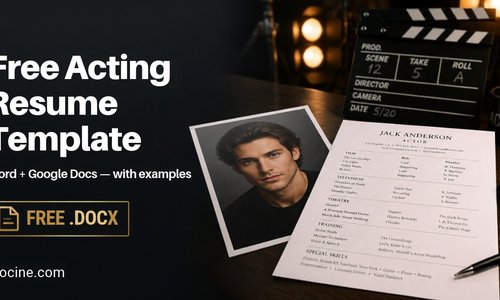
Step 4: Write an acting résumé
Even with no credits, you can list training, theatre, student films, special skills (languages, accents, dance, martial arts, horse riding, driving) and physical details. Keep it to one page and be honest. Casting directors check.
Step 5: Gain experience fast
- Student and short films: film schools constantly need actors
- Theatre productions: build discipline and confidence
- Background / junior artist work: learn how a set runs (and get paid)
- Web series, ads and vertical dramas: these cast new faces frequently. See our guide to vertical drama casting.
- Your own content: shoot short scenes with friends to practise and to build reel footage
Step 6: Build a showreel
A showreel (demo reel) is a 1–2 minute video of your best on-screen work. Put your strongest scene first, keep each clip short, and show range. If you have no footage yet, shoot two or three short, well-lit scenes with a partner. Quality matters more than length.
Step 7: Master the self-tape
Most first-round auditions today are self-tapes. You need:
- A plain background, soft front light, and clear sound (a cheap lav mic helps)
- A steady camera at eye level, framed from mid-chest up
- A reader off-camera, placed close to the lens
- Your lines memorised, with clear, specific choices
- Following the casting brief exactly (slate, file name, deadline)
Step 8: Create profiles where casting happens
Casting directors and producers search online platforms for talent. Create a complete profile with headshots, your reel, skills and location. On AIO Cine you can create a free talent profile and apply directly to casting calls posted by productions.
Step 9: Audition constantly
Treat auditions as practice reps, not life-or-death tests. Track every audition (role, casting director, date, result) and learn from each one. Many working actors audition dozens of times for every booking. That is normal.
Step 10: Get an agent (when you're ready)
Agents get you into auditions you can't access alone. Most agents want to see training, a professional reel and some credits first. Research agencies that represent actors at your level, then send a short, professional submission with your headshot, résumé and reel link. Legitimate agents earn commission from your bookings. They do not charge upfront registration fees.
Do you need to go to drama school?
No, but training of some kind is essential. Drama school gives intensive skill, industry showcases and a network. Classes, workshops and theatre can also build a strong foundation for far less money. Many successful actors never attended a full-time drama school.
How long does it take to become an actor?
You can book your first small paid job within months if you train, prepare materials and audition actively. Building a sustainable career usually takes years. Most professional actors also work other jobs between bookings, especially early on.
How much do actors earn?
Earnings vary enormously by country, medium and level. Background work and small roles pay modest day rates, while union contracts set minimums in many countries (such as SAG-AFTRA in the US and Equity in the UK). Most actors earn irregularly, so learn to budget between jobs. For India-specific figures, see our film industry salary guide.
Becoming an actor at different ages
- Teens: school drama, youth theatre and training. Parents must be involved and should check every opportunity. Read our child actor safety guide.
- 20s: the time for intensive training, theatre and volume of auditions.
- 30s, 40s and beyond: it's never too late. Character roles, parent roles and professionals are always needed, and life experience is an asset.
How to avoid acting scams
- Never pay to audition or for "guaranteed roles"
- Be wary of "agencies" that charge large registration or portfolio fees
- Auditions happen in professional spaces or online, not private hotel rooms
- Research the production company and casting director before you go
- Bring someone with you if anything feels wrong
More detail is in our guide to fake casting calls.
Your first-90-days acting plan
| Weeks | Focus |
|---|---|
| 1–2 | Enrol in a class or workshop. Start reading plays and screenplays daily. |
| 3–4 | Get headshots. Write your one-page résumé. |
| 5–8 | Join a theatre group or student films. Shoot 2–3 practice self-tapes a week. |
| 9–10 | Cut a short showreel. Create your online talent profiles. |
| 11–13 | Apply to 10+ casting calls a week. Track every audition. |
Start today
The best time to start was yesterday. The second best is now. Create your free AIO Cine profile, upload your headshots and self-tape, and start applying to casting calls today.
Frequently asked questions
How do I become an actor with no experience?
Start with acting classes and community theatre, get headshots, act in student and short films, build a short showreel, create online talent profiles, and apply to casting calls consistently.
Do I need a degree to be an actor?
No. Acting requires training and skill, not a degree. Drama school helps but is not mandatory.
Am I too old to start acting?
No. Productions need actors of every age, and many actors start in their 30s, 40s or later.
How do actors get auditions?
Through casting platforms, agents, casting director networks, theatre and film-school connections, and self-submissions to casting calls.
Do I need an agent to start acting?
No. Most actors start by self-submitting. An agent becomes valuable once you have training, a reel and some credits.
Should I pay for an audition?
Never. Legitimate auditions are free. Paying to audition is a common scam.
Related Blog Posts